


Selected Poems by Tom Kapanka on Patterns of Ink from July through December 2006
Wooden Box:
Recalling President Kennedy's Assassination (in the context of 2nd grade)
Originally prologue to a story called "When Doubt Came Slowly" posted December 16, 2006)
The shrill chirp of a whistle
drew us running to our lines,
but just as it should blow again
the recess lady stepped inside,
and left us standing
in November's cold.
No second whistle blew.
Instead, a hand beckoned
from the doorway
and we entered single file.
Outside each classroom
the teachers' faces were
more sullen than stern.
“Heads on your desks,”
mine whispered as we passed.
"Heads on your desks"
was never harsh;
as always after recess
it was her way of saying,
"Hang up your wraps
(as teachers back then called our coats).
Don't talk. Settle down from play.
Let your feet forget their running.
Let your hands let go
the cold steel of monkey bars,
merry-go-round, and ladder slides.
Let your ears erase
the squeaking drone of swings
and chalky chants of hop-scotch girls
and jump-rope songs and
'teeter-totter, bread and butter'
echoing to the hill.
Let your face feel the smooth,
warm wood of your closed desk.
Listen to the quiet breath
inside your pillowed arms
and find a space inside your mind
to put the final lesson
of this day.
There was nothing unusual
about hearing her say
"Heads on your desks,"
but she'd never whispered it before.
From the wooden box
above the blackboard
came a strange and distant voice.
It was not the principal but was, in fact,
a radio broadcast piped-in to every room
from his office “P.A.”
Soon the somber words and phrases
seemed to settle in the room
so that even a second-grade boy
with his head on his desk
knew why his whole school was
suspended in silence
but for the wooden box:
Sniper. Dallas. Fatal shot.
The strange voice
left no room for doubt.
The president
of the United States,
John Fitzgerald Kennedy,
was dead.
Assassinated,
a word I'd never heard before.
One by one, eyes rose
in puzzled understanding.
Our teacher paced the room
and touched the heads
of those with questions.
Her tender voice helped pass
the helpless pauses in the news.
And when a priest
(from where they rushed him)
came on the air to pray,
she walked up to her lesson book
and bowed her head.
We knew to do the same.
Closing my eyes I saw
she did not cross herself
as some around me did.
Hard against her upper lip
she pressed a crumpled hanky,
and her shoulders shook
a little with each breath.
Closing my eyes
I saw...
"Wooden Box" Part 2
Once day was done at school,
It seemed at first

The shrill chirp of a whistle
drew us running to our lines,
but just as it should blow again
the recess lady stepped inside,
and left us standing
in November's cold.
No second whistle blew.
Instead, a hand beckoned
from the doorway
and we entered single file.
Outside each classroom
the teachers' faces were
more sullen than stern.
“Heads on your desks,”
mine whispered as we passed.
"Heads on your desks"
was never harsh;
as always after recess
it was her way of saying,
"Hang up your wraps
(as teachers back then called our coats).
Don't talk. Settle down from play.
Let your feet forget their running.
Let your hands let go
the cold steel of monkey bars,
merry-go-round, and ladder slides.
Let your ears erase
the squeaking drone of swings
and chalky chants of hop-scotch girls
and jump-rope songs and
'teeter-totter, bread and butter'
echoing to the hill.


Let your face feel the smooth,
warm wood of your closed desk.
Listen to the quiet breath
inside your pillowed arms
and find a space inside your mind
to put the final lesson
of this day.
There was nothing unusual
about hearing her say
"Heads on your desks,"
but she'd never whispered it before.
From the wooden box
above the blackboard
came a strange and distant voice.
It was not the principal but was, in fact,
a radio broadcast piped-in to every room
from his office “P.A.”
Soon the somber words and phrases
seemed to settle in the room
so that even a second-grade boy
with his head on his desk
knew why his whole school was
suspended in silence
but for the wooden box:
Sniper. Dallas. Fatal shot.
The strange voice
left no room for doubt.
The president
of the United States,
John Fitzgerald Kennedy,
was dead.
Assassinated,
a word I'd never heard before.
One by one, eyes rose
in puzzled understanding.
Our teacher paced the room
and touched the heads
of those with questions.
Her tender voice helped pass
the helpless pauses in the news.
And when a priest

(from where they rushed him)
came on the air to pray,
she walked up to her lesson book
and bowed her head.
We knew to do the same.
Closing my eyes I saw
she did not cross herself
as some around me did.
Hard against her upper lip
she pressed a crumpled hanky,
and her shoulders shook
a little with each breath.
Closing my eyes
I saw...
"Wooden Box" Part 2
Once day was done at school,
we walked in twos and threes and fours
to street corners where
“safety boys” with outstretched arms
kept us till the traffic cleared
then scurried us along.
It seemed at first
that not a thing had changed.
The sidewalks that we knew so well
still wound the same way home.
The sidewalks that we knew so well
still wound the same way home.
But that day more than most
mothers stood
mothers stood
waiting on front porches;
TVs flickered in the corner
as tables were set for supper;
and fathers coming home from work
sat a little longer in their cars,
trying to recall the things
dads are supposed to know.
In three days' time,,
In three days' time,,
we saw the widow veiled in black
with two children at her side.
with two children at her side.
We watched them say good-bye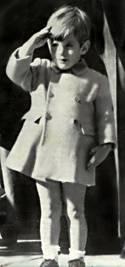
at the cathedral steps.
From there the horse-drawn caisson
bore the wooden box
to Arlington.
We winced at the three shots
of the soldiers' seven guns.
We watched them fold the flag.
We heard the broken note of taps
and the final nine that fill the sky,
"All is well, safely rest, God is nigh"
Then in farewell,
she laid her face,
as we had on our desks,
against the smooth, cold wood.
© Copyright 2007, TK, Patterns of Ink John-John Kennedy salutes his father's casket asas we had on our desks,
against the smooth, cold wood.
it passed toward Arlington. November 25, 1963.
Bugle used for taps at JFK’s Arlington graveside service
Snow (originally posted December 1, 2006)
 How drab the days
when fallen leaves
blow to and russet fro
and likewise later
melting March
without a bud to show.
The variegated leaf,
the frozen river’s flow...
at last the empty
in between
is covered by the snow.
© Copyright 2007, TK, Patterns of Ink
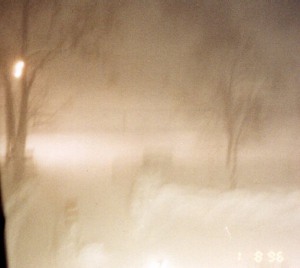
This poem speaks to the role of snow from Thanksgiving to St. Patrick's Day. I prefer snow to mud. It masks the ugly days after the colorful leaves have fallen and spring is months away. That's what I mean by "the empty in between," which might have been a better title. This was written on the first "snow day" of that year.
 How drab the days
when fallen leaves
blow to and russet fro
and likewise later
melting March
without a bud to show.
The variegated leaf,
the frozen river’s flow...
at last the empty
in between
is covered by the snow.
© Copyright 2007, TK, Patterns of Ink
This poem speaks to the role of snow from Thanksgiving to St. Patrick's Day. I prefer snow to mud. It masks the ugly days after the colorful leaves have fallen and spring is months away. That's what I mean by "the empty in between," which might have been a better title. This was written on the first "snow day" of that year.
At Grace (Originally posted November 19, 2006)
Sometimes…
it’s the little things
like putting in the extra leaf
and keeping window watch;
then taking covered dishes at the door;
and hugging through coats
that bring in winter’s air.
Staring fondly at the face
come furthest home;
laughing with the funny uncle
in the kitchen;
holding hands once large and small—
but ever more alike—
around the laden table;
and smiling at the changeless gaze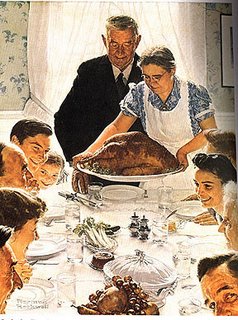
(framed on the far mantle)
of one not there to pray.
It’s the little things
that make Thanksgiving.
The tastes and smells
and long-awaited feast
at best are just
the garnish of the day.
It’s the enormity
of little things
providentially in place
that lumps our throats
and lifts our thoughts
…at grace.
.
© Copyright 2006, TK, Patterns of Ink
.
These thoughts were written as I recalled the first time I was asked to say the blessing at Thanksgiving the year after my father passed.
Grow slowly, Girl.
... I’ll try to bring what’s best
... and let you pass the dappled day
... asleep upon my chest.
Dream gently, Babe,
... in whimsy whispered rhyme.
... Wake when you wish. Grow slowly, Girl.
The world has a way with time.

The world, little girl,
... has a bus to catch,
... a west-bound bus to the sun
... that makes the young wish to be old
... and the old wish to be young.
The world, little girl,
... is a clatter of heels
... a stumble down cluttered halls,
... a rush toward the flicker of neon
... and florescent painted walls.
The world knows all the short cuts,
... broad ways of a narrow sort,
... all the black-brick, back alley short cuts
... to things too soon cut short.
Yes, the world, little girl,
... has a bus to catch.
... It hasn’t the time to stay.
... It doesn't know where it’s going
... but finds the fastest way.
Grow slowly, Girl.
... I’ll try to bring what’s best
... and let you pass the dappled day
... asleep upon my chest.
Dream gently, Babe,
... in whimsy whispered rhyme.
... Wake when you wish. Grow slowly, Girl,
... The world has a way with time.
© Copyright 1985, TK, Patterns of Ink
Originally entitled: "To Emily" 1985. The title change was due to the fact that we eventually had three daughters and there were similar piictures of each of them napping on my chest.)
Some thoughts I recall from the notes of this poem: The word "dappled" is usually used to describe something showing both light and darkness like the way sun shines on a picnic blanket under a shade tree. I also used it because of its subliminal association (at least in my mind) with "The 59th Street Bridge Song," [“I’ve got no place to go; no promises to keep; I’m dappled and drowsy and ready to sleep.”] The line "black-brick back alley short cuts" was an image from my memories of when my father took us at night to the YMCA in old downtown Detroit. (It was torn down to build Ford Field.) The dark alley between the parking lot and the "Y" was very scary to me. And lastly, the tone of this piece was influenced by some work by Lew Sarett, a seldom-cited poet I studied in college. The final line, "The world has a way with time" was inspired by a line in a Sarett poem about the loss of innocence that can be seen in the eyes of wayward girls.
The weekend at the beach house
was more than just an autumn getaway;
it was a purging of sorts
and out-of-sorts
and a full embrace of last resorts
for just the two of them.
Saturday was good
but went as the mother knew it would
and as the daughter needed to endure.
Sunday brought a pouring rain
and silent solace to the house
as one stood staring through the pain
with hope's warm cup in both her hands
and love still sleeping in the other room.
By the time her daughter woke,
the sun had broken through the gray
and begged them both to stay and stroll
the boardwalk's damp and puddled planks
to funnel cakes and food stands in a row
and photo booths
where curtains shut out time
and funny faces are forever young;
then further on to a little shop
where something stopped them,
something small
that draped across her open palm
and dripped like sorrow down:
a cross it was for her to wear
(unlike the one she'd have to bear
through what the days ahead would hold).
She clasped it round her daughter’s neck,
and forehead to forehead paused
with blurring eyes that spoke for both of them.
Then turning back and walking close,
their heads at subtle angles to the wind,
arm in arm they walked and talked
until they saw the distant door.
Too soon to let the day be done
and knowing that the setting sun
in truth would bring a difficult dawn,
the notion came to try
the kite they’d planned to fly.
And so the daughter did
there in the cool sand
while mother watched her little girl
(grown up too soon and long ago)
against a scape of sky and sea
and innocence,
laughing at a kite that (just as she)
seemed tethered to this earth by more than string
and wanting more than life itself to soar
and please
and dance upon the breeze
and leave at last the breaking waves
and broken heart below.
it’s the little things
like putting in the extra leaf
and keeping window watch;
then taking covered dishes at the door;
and hugging through coats
that bring in winter’s air.
Staring fondly at the face
come furthest home;
laughing with the funny uncle
in the kitchen;
holding hands once large and small—
but ever more alike—
around the laden table;
and smiling at the changeless gaze

(framed on the far mantle)
of one not there to pray.
It’s the little things
that make Thanksgiving.
The tastes and smells
and long-awaited feast
at best are just
the garnish of the day.
It’s the enormity
of little things
providentially in place
that lumps our throats
and lifts our thoughts
…at grace.
.
© Copyright 2006, TK, Patterns of Ink
.
These thoughts were written as I recalled the first time I was asked to say the blessing at Thanksgiving the year after my father passed.
Grow Slowly, Girl (Originally written in 1985 / posted November 3, 2006)
... I’ll try to bring what’s best
... and let you pass the dappled day
... asleep upon my chest.
Dream gently, Babe,
... in whimsy whispered rhyme.
... Wake when you wish. Grow slowly, Girl.
The world has a way with time.
The world, little girl,
... has a bus to catch,
... a west-bound bus to the sun
... that makes the young wish to be old
... and the old wish to be young.
The world, little girl,
... is a clatter of heels
... a stumble down cluttered halls,
... a rush toward the flicker of neon
... and florescent painted walls.
The world knows all the short cuts,
... broad ways of a narrow sort,
... all the black-brick, back alley short cuts
... to things too soon cut short.
Yes, the world, little girl,
... has a bus to catch.
... It hasn’t the time to stay.
... It doesn't know where it’s going
... but finds the fastest way.
Grow slowly, Girl.
... I’ll try to bring what’s best
... and let you pass the dappled day
... asleep upon my chest.
Dream gently, Babe,
... in whimsy whispered rhyme.
... Wake when you wish. Grow slowly, Girl,
... The world has a way with time.
© Copyright 1985, TK, Patterns of Ink
Originally entitled: "To Emily" 1985. The title change was due to the fact that we eventually had three daughters and there were similar piictures of each of them napping on my chest.)
Some thoughts I recall from the notes of this poem: The word "dappled" is usually used to describe something showing both light and darkness like the way sun shines on a picnic blanket under a shade tree. I also used it because of its subliminal association (at least in my mind) with "The 59th Street Bridge Song," [“I’ve got no place to go; no promises to keep; I’m dappled and drowsy and ready to sleep.”] The line "black-brick back alley short cuts" was an image from my memories of when my father took us at night to the YMCA in old downtown Detroit. (It was torn down to build Ford Field.) The dark alley between the parking lot and the "Y" was very scary to me. And lastly, the tone of this piece was influenced by some work by Lew Sarett, a seldom-cited poet I studied in college. The final line, "The world has a way with time" was inspired by a line in a Sarett poem about the loss of innocence that can be seen in the eyes of wayward girls.
Third Person (Originally published November 2, 2006)
was more than just an autumn getaway;
it was a purging of sorts
and out-of-sorts
and a full embrace of last resorts
for just the two of them.
Saturday was good
but went as the mother knew it would
and as the daughter needed to endure.
Sunday brought a pouring rain
and silent solace to the house
as one stood staring through the pain
with hope's warm cup in both her hands
and love still sleeping in the other room.
By the time her daughter woke,
the sun had broken through the gray
and begged them both to stay and stroll
the boardwalk's damp and puddled planks
to funnel cakes and food stands in a row
and photo booths
where curtains shut out time
and funny faces are forever young;
then further on to a little shop
where something stopped them,
something small
that draped across her open palm
and dripped like sorrow down:
a cross it was for her to wear
(unlike the one she'd have to bear
through what the days ahead would hold).
She clasped it round her daughter’s neck,
and forehead to forehead paused
with blurring eyes that spoke for both of them.
Then turning back and walking close,
their heads at subtle angles to the wind,
arm in arm they walked and talked
until they saw the distant door.
Too soon to let the day be done
and knowing that the setting sun
in truth would bring a difficult dawn,
the notion came to try
the kite they’d planned to fly.
And so the daughter did
there in the cool sand
while mother watched her little girl
(grown up too soon and long ago)
against a scape of sky and sea
and innocence,
laughing at a kite that (just as she)
seemed tethered to this earth by more than string
and wanting more than life itself to soar
and please
and dance upon the breeze
and leave at last the breaking waves
and broken heart below.
There is a place here in West Michigan called Teen Challenge. These lines were written upon learning of a mom who spent one last day with a daughter before the young lady went into the program. The "third person" was not present but based these lines on details he heard about the day.
© Copyright 2007, TK, Patterns of Ink
There’s a patch of ground beside the path
...that runs between the trees,
...and yesterday my little girl
...was there down on her knees.
Her hands held clumps of lilac,
...both lavender and white,
...and she carefully arranged them
...on the stones that marked the site.
The day before, at twilight,
...we laid our dog to rest.
She tried to whisper something
...but fell sobbing on my chest.
Yet on this second visit
...no tear had traced her face,
...and her eyes showed calm contentment
...for having touched the place.
There’s a plot of earth just off the road
...that runs down to the shore
...where one by one, we’ll all be drawn
...by some endearing chore.
We may kneel to leave a single rose
...or brush back autumn leaves,
...and we’ll ask how hands find comfort
...so near a heart that grieves.
But the same heart will remind us:
...such acts aren’t for the dead—
...they are "rather for us" the living,
...as Lincoln aptly said.

Whether seventy or seven,
...wherever love is found,
...in time, all those who watch and wait
...are tender to the ground.
© Copyright 1995, TK, Patterns of Ink
A few weeks after my father's funeral, our little family dog was killed and buried at the back of our property. Lakeside Cemetery, where my father and many other relatives are laid to rest, is on the shore of Lake Huron in my home town.

So this is what
we're to believe:
That BANG! the box of BB's spilled
with no purpose, no design,
and nothing unfulfilled.
That WE ARE trumps I AM;
and PERCHANCE trumps what's WILLED.
We must put our trust
in rocks and dust since
life is just
a box of BB's spilled.
.
© Copyright 2007, TK, Patterns of InkIf you wonder what I really think, turn up your volume and click the word BANG .
Sometimes Death stands quietly
in bedside corners...
watching, waiting,
somehow knowing the plan.
But there are moments imposed on time
when even Death seems caught off guard
unable to count,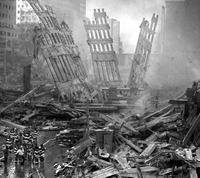
unwilling to look on.
And so began
our autumn of mourning
as grief
......upon grief
.............upon grief
showered down
like ashes from an ancient time...
at home in a fallen world.
.
© Copyright 2007, TK, Patterns of Ink
Written early Wednesday morning, September 12, 2001
Posted today, the Fifth Anniversary of that event.
I owe you—
not in dollars and cents
(though, in a way, that’s true).
I owe you…
I owe you in the sense
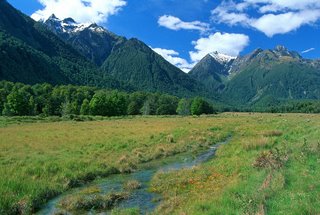 Wonder is
the meadow of the mind…
where God is kind enough
to let man find and walk
the common ground of
science and conscience—
the path between
what he thinks he is…
and what he knows he should be,
a place where quiet questions
are allowed…
and praise of answers
is aloud.
© Copyright 2000, TK, Patterns of Ink
Simply put,
thinking tests our grasp;
wondering tempts our reach.
We think about things
we know or hope to learn
and wonder about things
we may never understand.
While we assume
that knowledge trumps ignorance,
we dare not conclude
that certitude trumps wonder.
The opposite may be true.
Perhaps wondering is
our love language to God.
Perhaps wonder is our most
un-tampered-with form of worship.
Perhaps we never "know God" better
than when we are dizzied at
the thought of eternity
and the expanse of space;
when our hearts ache
with an unanswered "why?"
Perhaps when we feel
most lost, most orphaned, and when
His face is most inscrutable...
perhaps it's then
that crying, "Abba, Father"
most gladly bends
His holy ear.
© Copyright 2006, TK, Patterns of Ink
Hopes have a secret parlor
just big enough for two
with a loveseat near a reading lamp
and a window with a view.

Hope_ is a high cathedral
where we sometimes sit alone
in the silence of the stained glass
and the certainty of stone.
Hopes and dreams that happen
are the stuff of happiness
but more enduring is the Joy
of Hope… without the “s.”
© Copyright 2003, Patterns of Ink
.
“…and we rejoice in the hope of the glory of God.
Not only so, but we also rejoice in our sufferings,
because we know that suffering produces perseverance;
perseverance, character; and character, hope.
And hope does not disappoint us…” Romans 5:1-5
.
To Jim and Heather, 2003
© Copyright 2007, TK, Patterns of Ink
Tender to the Ground (Originally written June 1995 / posted October 28, 2006)
...that runs between the trees,

...and yesterday my little girl
...was there down on her knees.
Her hands held clumps of lilac,
...both lavender and white,
...and she carefully arranged them
...on the stones that marked the site.
The day before, at twilight,
...we laid our dog to rest.
She tried to whisper something
...but fell sobbing on my chest.
Yet on this second visit
...no tear had traced her face,
...and her eyes showed calm contentment
...for having touched the place.
There’s a plot of earth just off the road
...that runs down to the shore
...where one by one, we’ll all be drawn
...by some endearing chore.
We may kneel to leave a single rose
...or brush back autumn leaves,
...and we’ll ask how hands find comfort
...so near a heart that grieves.
But the same heart will remind us:
...such acts aren’t for the dead—
...they are "rather for us" the living,
...as Lincoln aptly said.
Whether seventy or seven,
...wherever love is found,
...in time, all those who watch and wait
...are tender to the ground.
© Copyright 1995, TK, Patterns of Ink
A few weeks after my father's funeral, our little family dog was killed and buried at the back of our property. Lakeside Cemetery, where my father and many other relatives are laid to rest, is on the shore of Lake Huron in my home town.
LIfe is Just (Originally posted October 22, 2006)

So this is what
we're to believe:
That BANG! the box of BB's spilled
with no purpose, no design,
and nothing unfulfilled.
That WE ARE trumps I AM;
and PERCHANCE trumps what's WILLED.
We must put our trust
in rocks and dust since
life is just
a box of BB's spilled.
.
© Copyright 2007, TK, Patterns of InkIf you wonder what I really think, turn up your volume and click the word BANG .
9-11 (Originally written the morning after September 11,2001 / posted September 11, 2006)
in bedside corners...
watching, waiting,
somehow knowing the plan.
But there are moments imposed on time
when even Death seems caught off guard
unable to count,
unwilling to look on.
And so began
our autumn of mourning
as grief
......upon grief
.............upon grief
showered down
like ashes from an ancient time...
at home in a fallen world.
.
© Copyright 2007, TK, Patterns of Ink
Written early Wednesday morning, September 12, 2001
Posted today, the Fifth Anniversary of that event.
A Teacher's IOU (originally written 1986 / posted August 6, 2006)
not in dollars and cents
(though, in a way, that’s true).
I owe you…
I owe you in the sense
that every day… every day…every day
we meet,
and I say, “Listen…”
and at the various levels which you do,
I owe you…
for it’s a costly thing
to be paid ATTENTION
a single time more than I’ve earned it.
Open eyes and ears keep book—
and surely after all this time…
I owe you…
Not just in dollars and in sense,
but in reflections…
..........reflections...of Him who created
time and space and you and me
and mixedtheminto… NOW…
which we occupy together.
He holds the true account,
and His grace provides the balance
I owe you….
written in 1986 to the Class of ‘86
© Copyright 2007, TK, Patterns of Ink
we meet,
and I say, “Listen…”
and at the various levels which you do,
I owe you…
for it’s a costly thing
to be paid ATTENTION
a single time more than I’ve earned it.
Open eyes and ears keep book—
and surely after all this time…
I owe you…
Not just in dollars and in sense,
but in reflections…
..........reflections...of Him who created
time and space and you and me
and mixedtheminto… NOW…
which we occupy together.
He holds the true account,
and His grace provides the balance
I owe you….
written in 1986 to the Class of ‘86
© Copyright 2007, TK, Patterns of Ink
Wonder is (Originally posted July 9, 2006)
Wonder isthe meadow of the mind…
where God is kind enough
to let man find and walk
the common ground of
science and conscience—
the path between
what he thinks he is…
and what he knows he should be,
a place where quiet questions
are allowed…
and praise of answers
is aloud.
© Copyright 2000, TK, Patterns of Ink
Simply put,
thinking tests our grasp;
wondering tempts our reach.
We think about things
we know or hope to learn
and wonder about things
we may never understand.

While we assume
that knowledge trumps ignorance,
we dare not conclude
that certitude trumps wonder.
The opposite may be true.
Perhaps wondering is
our love language to God.
Perhaps wonder is our most
un-tampered-with form of worship.
Perhaps we never "know God" better
than when we are dizzied at
the thought of eternity
and the expanse of space;
when our hearts ache
with an unanswered "why?"
Perhaps when we feel
most lost, most orphaned, and when
His face is most inscrutable...
perhaps it's then
that crying, "Abba, Father"
most gladly bends
His holy ear.
© Copyright 2006, TK, Patterns of Ink
Hope without the "S" (Originally posted: July 2, 2006)

just big enough for two
with a loveseat near a reading lamp
and a window with a view.

Hope_ is a high cathedral
where we sometimes sit alone

in the silence of the stained glass
and the certainty of stone.
Hopes and dreams that happen
are the stuff of happiness
but more enduring is the Joy
of Hope… without the “s.”
© Copyright 2003, Patterns of Ink
.
“…and we rejoice in the hope of the glory of God.
Not only so, but we also rejoice in our sufferings,
because we know that suffering produces perseverance;
perseverance, character; and character, hope.
And hope does not disappoint us…” Romans 5:1-5
.
To Jim and Heather, 2003
posted by .Tom Kapanka | 11:16 AM


0 Comments:
Post a Comment
<< Home